- Quick guide to the three sections of the public performance page
- Figures are time- and capital-weighted, not simple averages
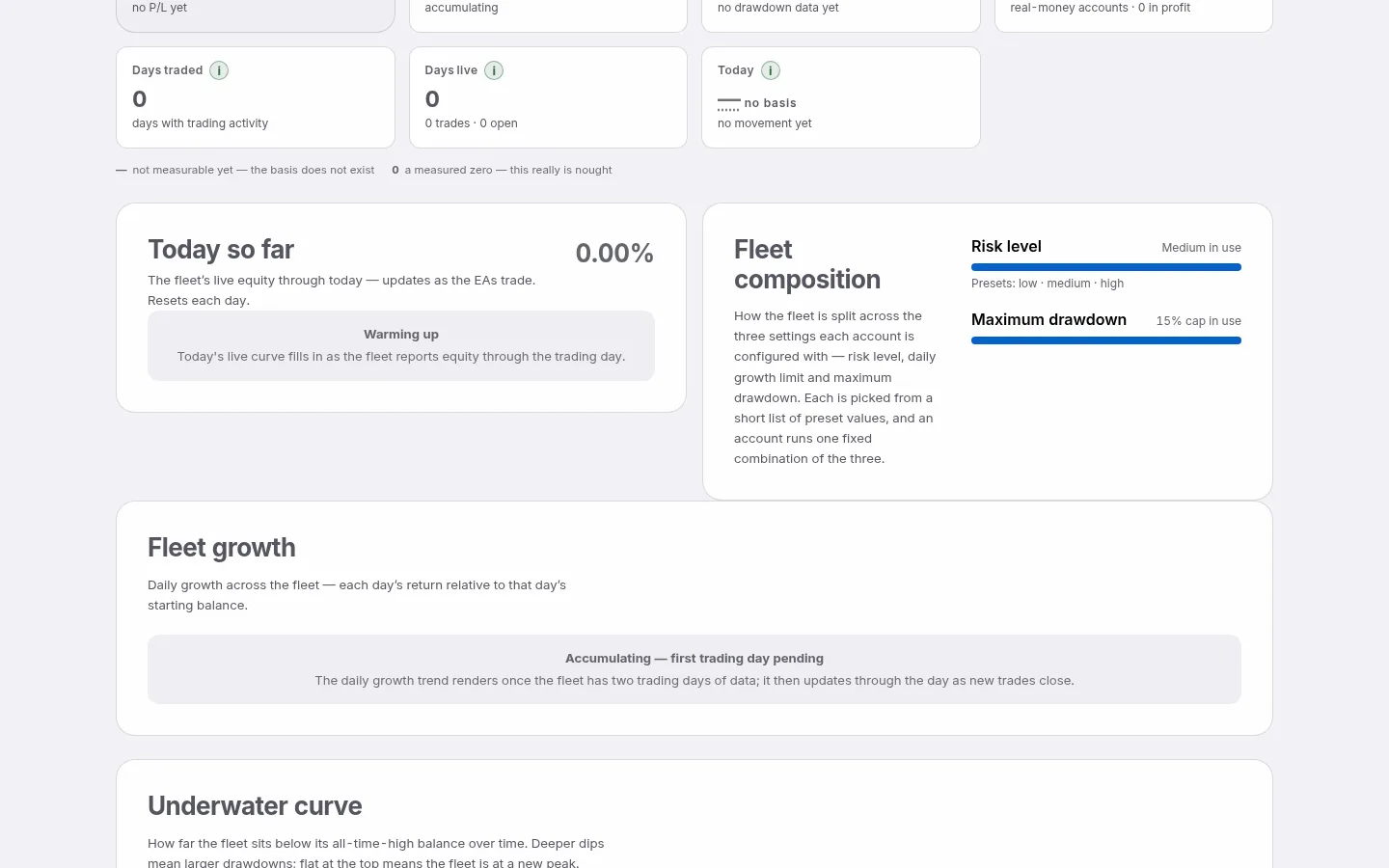
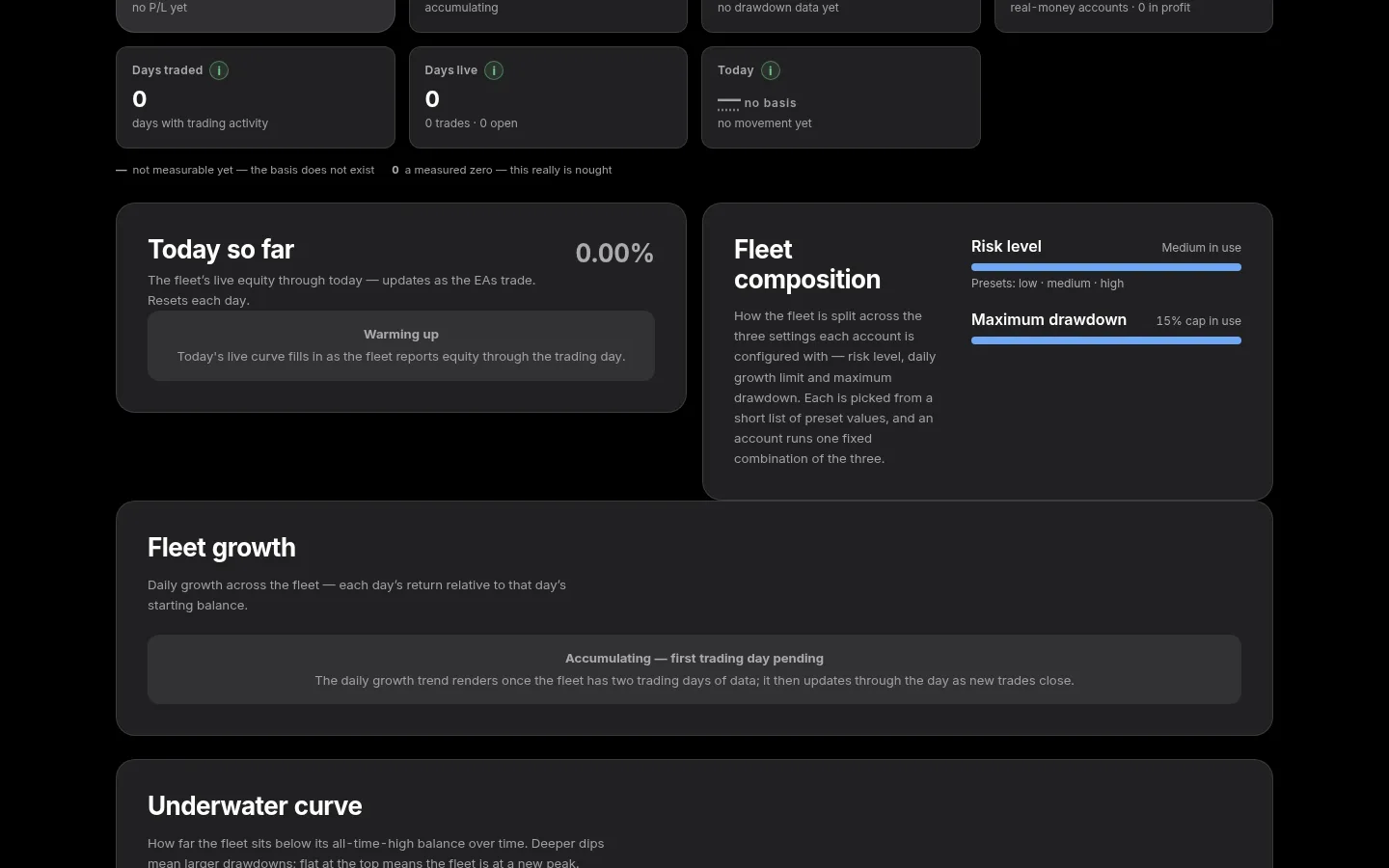
- The page states plainly when something can't yet be shown reliably
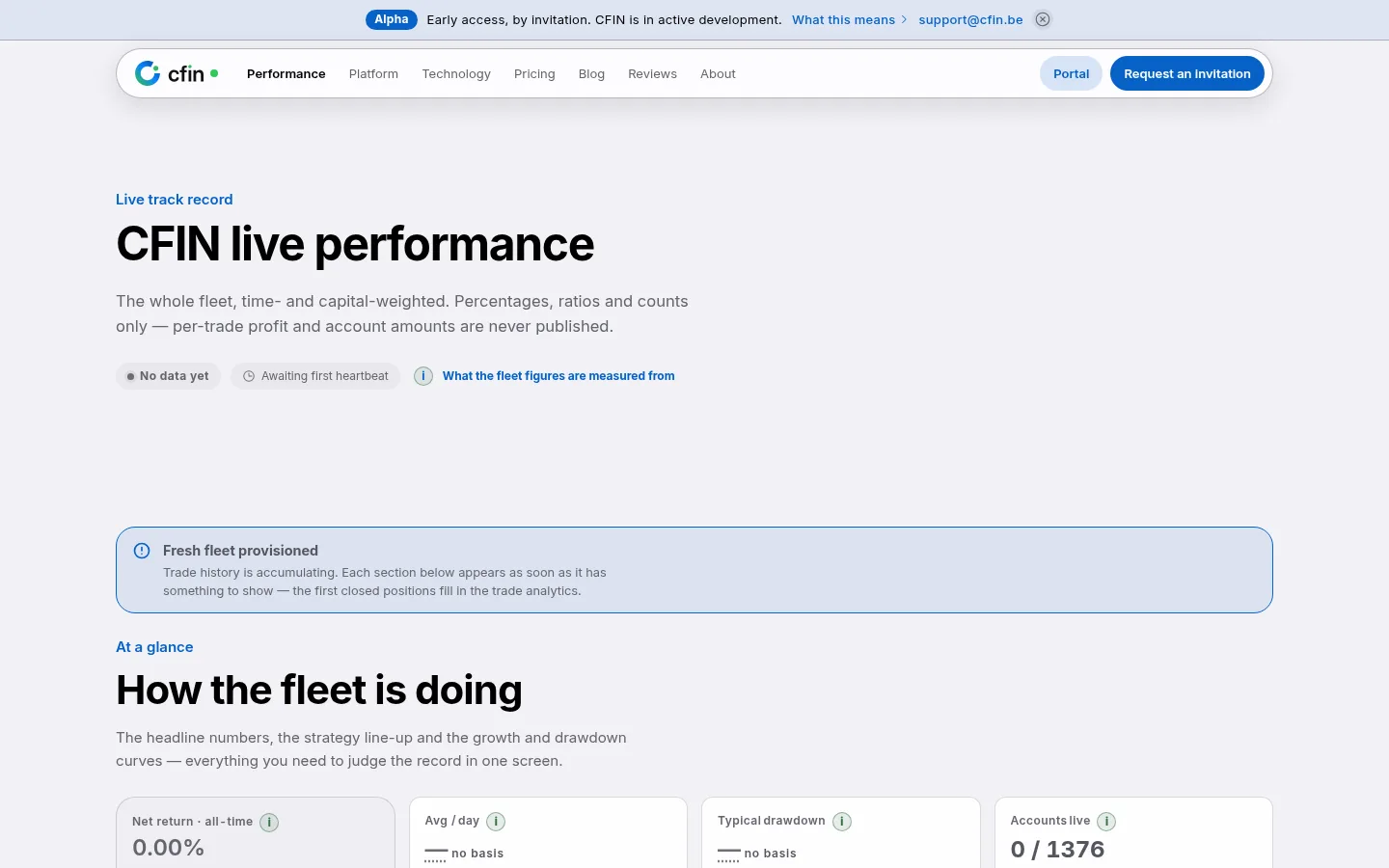
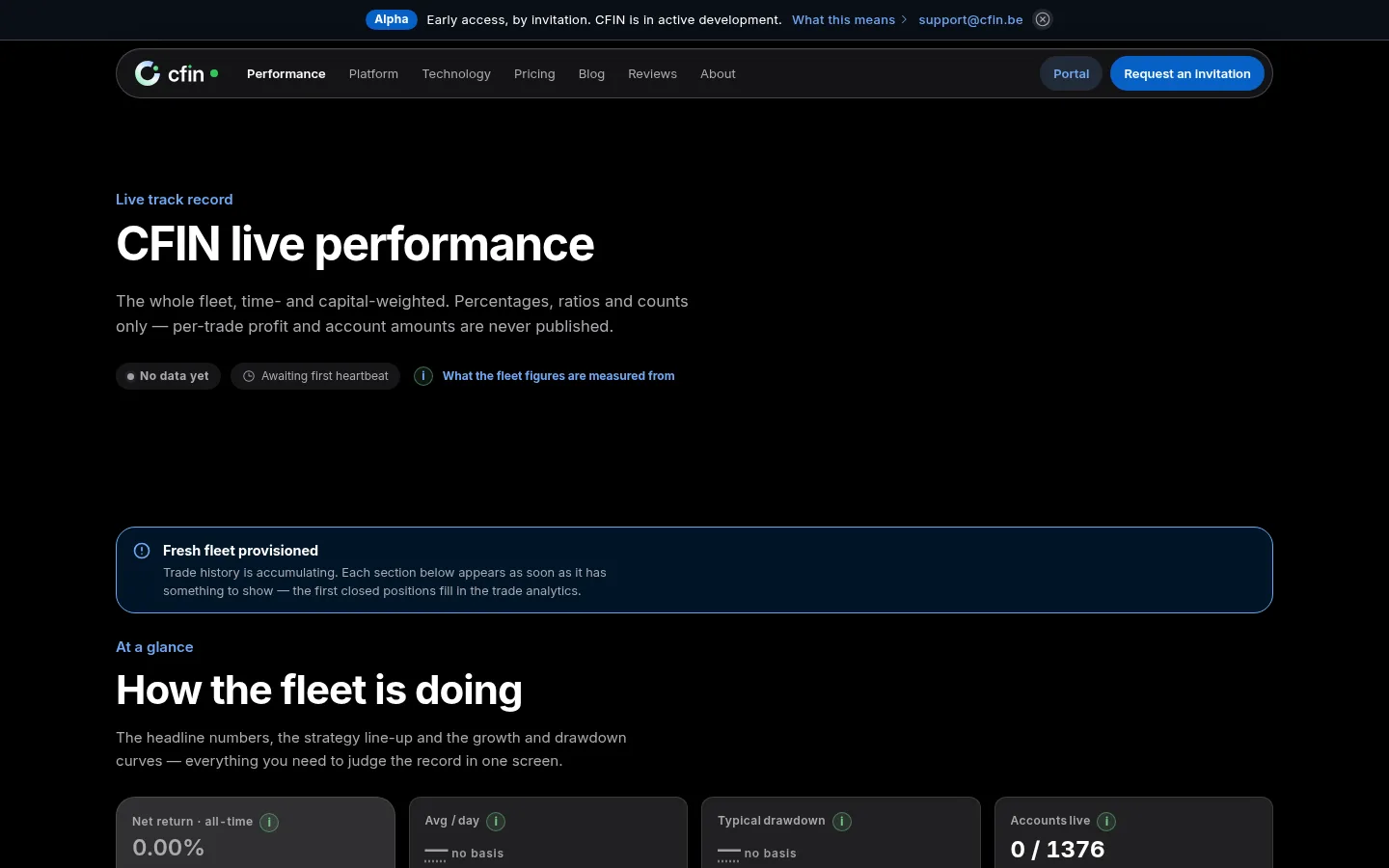
The public performance page, at cfin.be/performance, opens directly with the live figures for CFIN's own fleet of accounts — never a placeholder. This guide walks through three of its sections, How the fleet is doing, the daily returns calendar and Quality and consistency, and how to read each one correctly.
How to read the page
- Start with How the fleet is doing for the current, overall picture.
- Check the daily returns calendar to see activity broken out over time.
- Use Quality and consistency to see how steady results have been.
Why the figures are weighted
Every figure on the page is based on real, time- and capital-weighted activity — accounting for how much capital was active and for how long, rather than treating every account or every day as equal.
This matters because a simple average can be quietly misleading: a single very large account, or a single unusually active day, could otherwise dominate a number that looks like a fair average but isn't.
What you need to do
Read the page at face value — it's designed to avoid misleading averages or unexplained figures, and to be equally clear about strong and weak periods alike. Where a figure can't yet be shown reliably, the page says so in words rather than guessing.
In detail
- The How the fleet is doing section gives the current, overall picture; the daily returns calendar breaks activity out over time; Quality and consistency speaks to how steady results have been.
- Where a figure can't yet be shown reliably, the page says so in words rather than showing a placeholder number.
- The page is public and the same for every visitor — it doesn't show figures specific to your own personal account.
If a figure looks withheld
If a specific figure on the page currently reads as withheld or unavailable, that's the page refusing to show something it can't yet substantiate, which is a deliberate choice rather than an error.
A note on reading results
The figures on the performance page describe what CFIN's own fleet did in the past. They are not a forecast, a promise or advice, and they do not describe what your own account will do. Past performance is not a reliable indicator of future results. Trading carries risk and you can lose money.